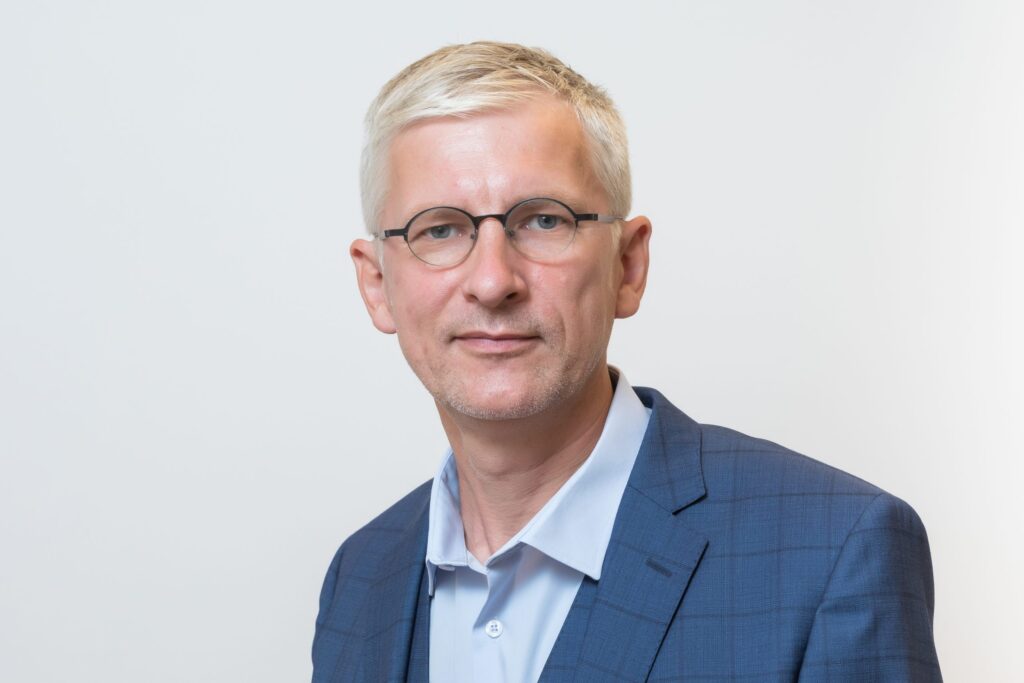
In a recent interview on LRT Radio, Lithuania’s Minister of Energy, Žygimantas Vaičiūnas, pointed to strong progress in domestic generation. He noted that Lithuania covered roughly 70% of its electricity consumption with domestic production in 2025, and said the country expects to improve on that in 2026 as additional renewable capacity comes online. The stated ambition is even higher: Lithuania aims to reach full electricity self-sufficiency by 2028, meaning the country would generate as much electricity as it consumes over the year.
What’s behind this momentum? Lithuania’s renewables build-out has been supported by both household and utility-scale investments – including solar adoption at the consumer level (supported by public schemes) and continued growth in commercial solar and wind projects. As domestic capacity expands, the system is increasingly able to cover demand and reduce the import share.
For the cleantech ecosystem across the Baltics, this shift matters. As renewable shares rise, the next bottleneck becomes system reliability – flexibility and balancing, storage, demand response, forecasting, and smarter grid infrastructure. It also strengthens the case for industrial electrification and clean heat as cleaner electricity becomes more available.
For the Baltic countries, Lithuania’s trajectory also sets a practical benchmark and accelerates convergence toward energy independence. As power systems become more interconnected, higher self-sufficiency in one country strengthens overall Baltic energy security, reduces exposure to volatile imports, and supports more stable cross-border electricity flows. It also signals a growing, region-wide market for shared cleantech solutions that can scale across Lithuania, Latvia, and Estonia rather than developing in isolation.
Lithuania’s targets are ambitious, but the broader signal is clear: the region is moving from planning to execution, and the market for practical, scalable energy-transition solutions is growing.
Source: Public comments by Lithuania’s Minister of Energy Žygimantas Vaičiūnas in an interview on LRT Radio (paraphrased)